It's early morning. The day is forecasted to be cold, breezy and wet. Jewel is laughing at the breezy graphic on the morning news. It's all hurry, hurry. Stick to the plan. Stick to the Routine. No extra time for anything if we're to leave on time. Brush Hair. Brush kids hair. Put on your shoes! Now what?
Oh yeah. Feed the animals.
"Hunter, don't forget to feed the dogs. Jewel, feed the kitties." Now, where's my coat?
And I'm out the door still looking back. A flash of white out of my peripheral vision. Did I see that right? I look full on. Yes it's a goat. Which one? Oh, it's Duchess and she's standing in the front yard. No, she's walking toward me.
"Hey Duchess, I call softly and grab the white plastic bucket piled on the desk on top of the iron work. On the porch. The coat is forgotten momentarily. I peer around for Buddy. Oh, he's in the other pen. He can't figure out how to get out. Good. He's set for now.
1-2-3-4 cups of sweet feed in the bucket. Sarah runs up to Duchess' heels. Doesn't nip but makes a perfect herding motion, then continues on. Duchess kicks up her feet and bucks her way toward the road as I come off the porch. The air is chilly and wet as the skin and hair on my arms becomes cold. No time to worry about that, now.
"C'mon, Duchess." I shake the bucket and she follows. I lead her down to the pasture where she'll be staked out today and put the bucket down. The white furry head goes down. The wide inquiring eyes disappear into the feed. She is head shy a bit as I come toward her with the buckle of the lead rope, but she doesn't pause for long in her eating frenzy.
Buddy's trying to climb the fence, but doesn't seem quite like he wants to try too hard. I have to get another container for him. Where's that coffee can from yesterday? The red plastic catches my eye. It's laying on the ground where it was kicked over last night. In the first pen. I grab it and walk to the house. Completely confusing Buddy who is still stuck in the second pen.
Now wearing a heavy jacket, I bring back the coffee can with the right ration. Shaking it gently as I walk, to get the billy's attention. Buddy tries to climb the fence dividing the two pens near the gate. His front legs hook over the wire, but he is reluctant to move quickly and jump over it. He's tangled with the fence before and it's too tall for him. He runs over to the temporary gate between pens and the roll of the wire confuses him. The fence is bent toward him, where Duchess made good her escape. She's the clever one, but she doesn't share her secrets because Buddy will eat her food. He looks at it and then turns around and heads to the opposite corner. I shake the bucket. He ignores me. I bang the bucket against the chicken house. He turns and comes back. My son stands there with the chicken feed. I set the bucket down. and try to help Buddy negotiate the temporary gate.
"Mom, the chicken's are eating the ---!" He shouts in alarms. I shoo the chickens and try to return to Buddy who is starting to wander off again. I move the sweet feed to a rock closer to me.
"Mom! the-"
"Okay, son. You're distracting me. I know the chickens are trying to eat it. I gotta get Buddy. Just be quiet. Alright?"
Buddy has wandered again. This time into the wire roll. He stops and turns around. He acts confused by the metal maze arrangement that is the temporary closure between the two pens. I put the can on top of the fence post away from the chickens and unhook the wire that creates the temporary closure. Buddy comes to the opening and looks at it, but doesn't attempt to step over the gap. He turns around. I have to show him it's okay and he can get in and out.
"Hey, Buddy. Hey, Buddy." I step over the low fence into the second pen. He looks at me. I step over the fence back into the first pen. He follows me. I take the can and he runs to the exit gate, blocking me way.
As we leave, Hunter places the chicken feed in the house and closes the gate to keep the chickens in.
"Get in the car," I call over my shoulder as Buddy and I do our start and stop dance to his stake in the pasture. I put the bucket down. His head goes into and he doesn't even look up when I snap the lead rope on.
So starts the day.
Thursday, November 15, 2007


Friday, November 9, 2007
Southern Food: Collards
Fridays are all about nutrition. Picture by strawbaleman.
Collards are associated with the South, nearly always. But I found some interesting recipes from other places. Check out this soup from Portugal, or this tasty dish from Ethiopia. The truth is that collard greens can be quite nutritious no matter how they are cooked. But too much ham hock = too much fat. The simplest way to make them, by boiling them in water for awhile, is the best way to eat them.
Collards are an excellent autumn food. They can withstand frost. I saw it happen with my own eyes this week. We had heavy frost on the field two mornings in a row and picked well over a bushel of collards today. There's more where that came from, too. Some people say they taste even better after a frost. Even though you can grow them year round, they are best from January to April when other vegetables do not grow.
Some of the nutrients found in collards include vitamin A, vitamin C, zinc, vitamin E, folate, potassium, niacin, riboflavin and vitamin B6. 1 cup of collards properly cooked contains less than 50 calories and a little over 20% of recommended daily fiber. It also good for a heart healthy diet because of the B vitamins, folate and riboflavin.
Believe it or not, collards also contain about 22% of the daily requirement for calcium in one cup. I was amazed. If you are lactose intolerant, this is one way for you to get calcium in your diet.
One thing to bear in mind is that collards is part of a group of vegetables that contain oxalates and should not be eaten by people with kidney or gall bladder problems. You can read more on the nutritional details of collards at the World's Healthiest Foods. Even more information about collards can be found at: World Community Cookbook
Thursday, November 8, 2007
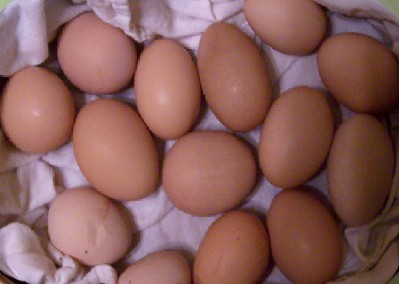
Where's The Egg?
Thursdays are all about animals.
As the weather gets colder and the days get shorter, my thoughts turn to providing warmth and shelter to the animals. Will their nutrition needs change, now that it's colder. Will the length of the day affect them in any way? Do/can animals get SAD (seasonal affective disorder)? It's sounds kind of silly, but since I want to keep my animals in the best possible health, I must ask.
If you've been checking the egg count periodically, you will notice that it has been dropping steadily since early October. This is because once daylight hours drop below 14, chickens do not lay as many eggs. Why are there still eggs in the grocery store all year round? Are they $2 a dozen because they're flying them in from the tropics? Well, they're not exactly flying them in from the tropics. But, in large scale chicken farming the barns are kept a steady "optimal" temperature and the light is kept on for 14 hours per day. This uses energy that I can't afford. It is not cost-effective to do this for a small flock. Plus, t'ain't nachril.
I view the winter as a time to rest up and prepare for the energy of spring. Chickens that are kept up all hours of the night wear out faster. Winter also means that the chickens need to eat differently. They need to be able to have extra energy for the cold nights, so instead of feeding them only in the morning, I have to make sure they have food in the afternoon. When they eat, their body temperature rises for awhile which will help them on those frosty nights. A chicken house doesn't hurt, either. We converted an old Sears storage shed to a chicken house and they are lovin' it.
I really can't tell whether animals get SAD. I guess that one's for the scientists. My chickens are happy. And warm. And well-fed. And resting up for spring.
Subscribe to:
Posts (Atom)